How to Leverage Hybrid Security to Build Enterprise Market Trust
The AI-Validation Gap: Why Your Security Posture Dictates Your Market Trust
In the next five minutes, you will discover how to bridge the critical gap between AI-driven development and the residual risks that automated tools structurally overlook. As marketing leaders, we know that brand equity is built on trust, yet a single breach can dismantle years of pipeline growth; this case study reveals why manual offensive security is the necessary final mile for any AI-native organization. The bottom line is that while AI closes the "easy" vulnerabilities, it creates a false sense of security that only practitioner-led validation can rectify to protect your most valuable asset: your reputation.
The Business Case for Hybrid Security Intelligence
At The Insightful Collective, we’ve spent years debating the "automation vs. human" dichotomy. The Lorikeet Security case study with Flowtriq provides the data-backed answer we’ve been looking for: it isn’t an "either/or" scenario, but a "both/and" necessity. For the modern CMO or Growth Lead, security is no longer a back-office IT concern; it is a core component of market positioning.
As we analyzed the Flowtriq results, our team was struck by the ROI of "clearing the deck." By using Claude-driven AI audits to handle low-level vulnerabilities like SQL injection and XSS, Flowtriq allowed Lorikeet’s human experts to focus on high-value, complex architectural flaws. This creates a massive competitive advantage. In a crowded SaaS marketplace, being able to prove—not just claim—that your infrastructure has survived both AI-scale auditing and elite manual penetration testing is a powerful differentiator. It accelerates the sales cycle by preemptively answering the rigorous security questionnaires of enterprise buyers. When your pipeline depends on moving from "startup" to "trusted partner," this hybrid approach is the fastest path to institutional credibility.
Key Strategic Benefits
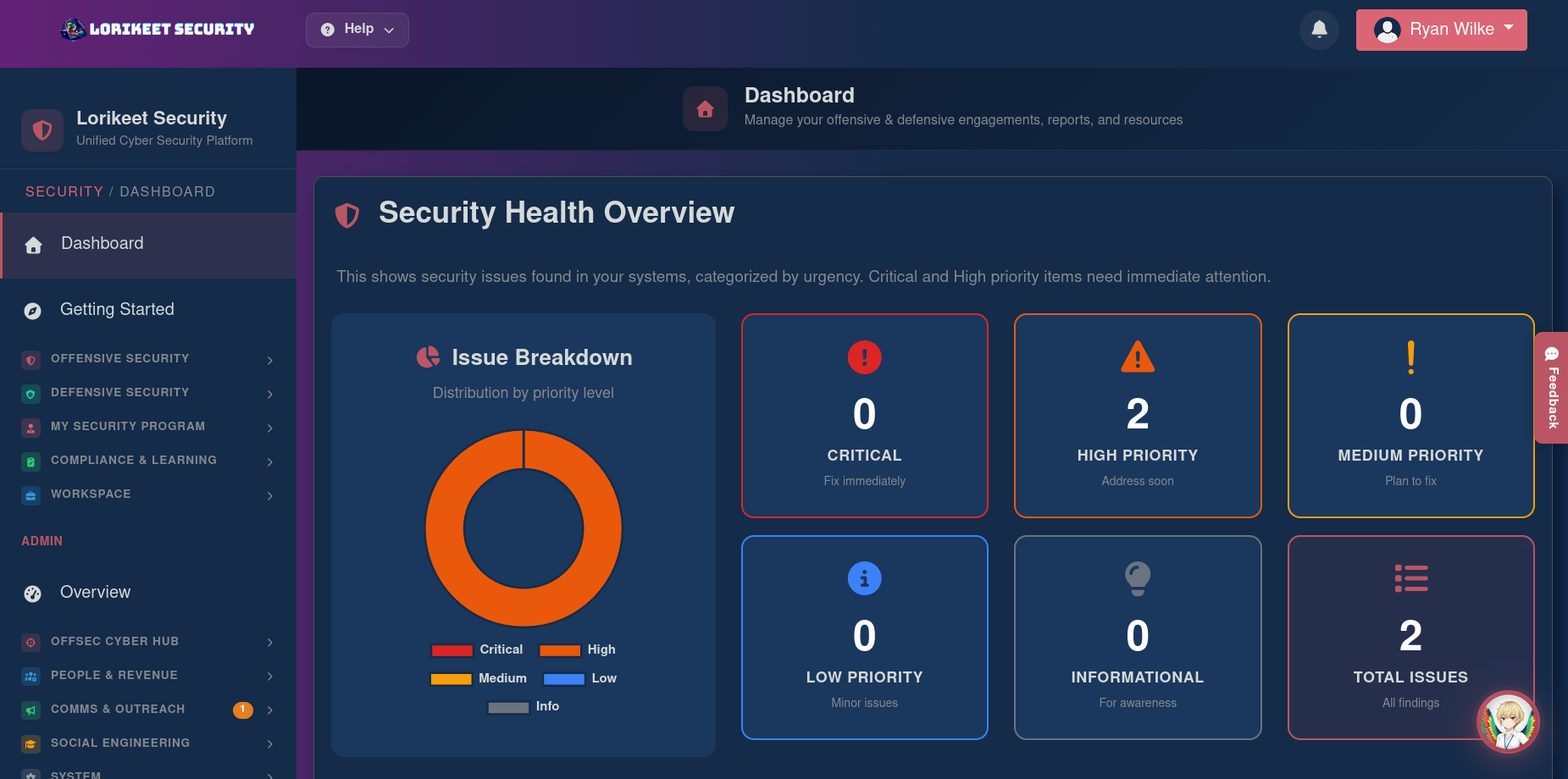
- Operational Efficiency: By integrating Lorikeet’s PTaaS (Penetration Testing as a Service) portal, marketing and product teams can view live findings and chat with testers in real-time. This eliminates the traditional "black box" reporting lag, allowing for rapid remediation that keeps product launches on schedule without sacrificing safety.
- Cost Impact: We’ve found that the "AI-first, Manual-second" approach significantly reduces the total cost of ownership for security compliance. Automating the discovery of common code flaws via tools like Cursor or Copilot allows you to spend your premium security budget on finding the high-impact "edge cases" that actually lead to catastrophic data breaches.
- Scalability: As you scale into regulated markets—whether it’s Fintech, Healthcare, or Government—the ability to map manual findings to frameworks like SOC 2, HIPAA, and FedRAMP is essential. Lorikeet’s model ensures that as your attack surface grows through AI-generated code, your defensive validation grows at the same velocity.
- Risk Factors: The primary risk is the "Automation Compliancy Trap." Relying solely on AI audits can leave doors open in session management and proxy configurations—areas where AI currently lacks the contextual intuition to "think" like a malicious actor.
Bridging the Implementation Chasm
Transitioning to an AI-native security model requires more than just a new tool; it requires a shift in how your development and marketing teams communicate about risk. Based on our collective experience, the implementation of Lorikeet's findings into a workflow like Flowtriq’s takes an integrated approach. Leadership must prioritize a culture where AI-generated code is treated as "guilty until proven innocent."
The integration requirements are streamlined through Lorikeet’s modern portal, but the real work lies in change management. You must ensure your engineering teams are utilizing the real-time chat features to understand why a manual finding trumped an AI scan. This creates a feedback loop that improves your internal AI prompting over time. To implement this effectively, we recommend a 30-day "security sprint" where Lorikeet’s offensive team tests the boundaries of your AI-audited code. This timeline provides immediate, actionable data that can be used in your next quarterly business review to demonstrate a proactive, rather than reactive, security posture to stakeholders and board members.
Navigating the Modern Defensive Landscape
When we look at the alternatives, the landscape is divided between legacy giants and automated scanners. Traditional firms like Mandiant or NCC Group offer deep expertise but often lack the "AI-native" agility and real-time transparency that modern SaaS firms require. On the other end of the spectrum, automated platforms like Snyk, Wiz, or Veracode are excellent for continuous scanning but lack the creative "adversarial thinking" required to find the session management and logic flaws highlighted in the Flowtriq case study.
Lorikeet Security occupies a unique middle ground. Unlike crowdsourced bug bounty platforms like HackerOne or Bugcrowd, which can be noisy and inconsistent, Lorikeet provides a structured, practitioner-led engagement. We’ve observed that for companies in the 2026 market, the "black box" nature of legacy pentesting is becoming a bottleneck. Lorikeet’s PTaaS model directly addresses this by providing the same level of visibility you expect from your marketing tech stack.
Recommendation for Marketing Leadership
Our collective recommendation is clear: do not let your security posture become a bottleneck for your pipeline. Start by auditing your current AI-assisted development workflow. If you are relying solely on automated tools like GitHub Advanced Security or internal AI audits, you are likely missing the runtime and configuration risks that lead to breaches. Contact Lorikeet Security to schedule a gap analysis; the goal is to shift from "we think we're secure" to "we have validated our resilience against human and machine intelligence."