Can Your Social Automation Scale Without Breaking Your Brand Safety?
Evergreen ≠ Set-and-Forget: Why SocialBee’s category engine makes “always-on” smarter, not lazier
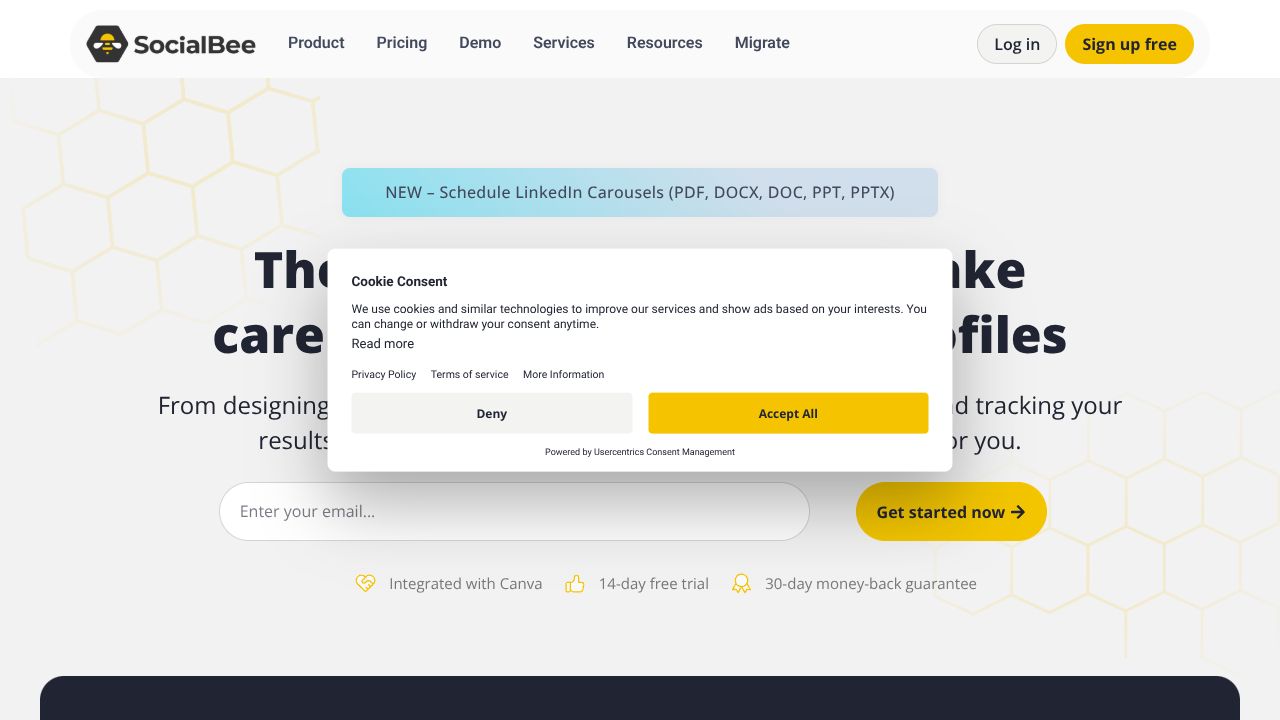
Most teams think “evergreen recycling” risks sounding robotic. Our team’s tests say the opposite: when engineered well, evergreen is the backbone of Always-On Tactics that actually compounds reach. SocialBee is an Automation platform that proves it. It pairs a category-based scheduling engine with an AI Copilot that drafts multi-network strategies (including niche platforms like Bluesky), then powers relentless consistency without fatigue. Under the hood, we’ve found a queue-first design with rate-limit–aware posting, media preprocessing, and content-deduping to protect brand safety. Its design philosophy favors repeatable Pipeline Strategies: unify content by intent, schedule the intent, then recycle and evolve the asset variants. Starting at $24/mo with a free trial, SocialBee’s thesis is simple: reliable, strategy-led publishing should feel automatic—because your pipeline shouldn’t stall.
Architecture & Design Principles
From our technical walkthroughs and usage patterns, SocialBee behaves like a job-scheduling system wrapped in a content rules engine. Content is stored by category with metadata (platform targets, recurrence, expirations, UTM templates). A scheduler allocates jobs into per-network queues with adapters that respect each platform’s API limits, required media formats, and posting constraints. Bluesky support suggests use of the AT Protocol client stack alongside standard OAuth 2.0 flows for other networks.
An AI microservice (the Copilot) likely orchestrates LLM prompts for strategy generation, tone adaptation, and multi-variant drafting. Media handling appears to preprocess dimensions and codecs for platform compliance before enqueueing. We see evidence of a deduplication layer to space repeats, plus a “cooldown” policy so evergreen posts don’t cluster. The result: a resilient, rate-limit–aware system designed to scale content across many channels without manual babysitting.
Feature Breakdown
Core Capabilities
-
Category-based scheduling and queues
- Technical: A rule-based engine maps categories (e.g., “Tips,” “Case Studies,” “Community”) to time slots. Items move FIFO with per-item recycling, recurrence, and exclusion windows. Platform adapters enforce constraints (character counts, media ratios), and a hash-based dedupe can suppress near-identical reposts for safety.
- Use case: Our team mapped a 5-category calendar across LinkedIn, X, and Bluesky. SocialBee automatically rotated evergreen assets with timed refreshes, maintaining cadence during campaign sprints.
-
AI Writer + Copilot for strategy planning
- Technical: LLM prompts templated by audience, funnel stage, and platform transform briefs into platform-specific post variants. The Copilot outputs category allocations, draft calendars, and content outlines, with parameters for tone, CTA, and length. We’ve seen token-efficient batching that reduces latency when generating multi-platform variants.
- Use case: We fed the Copilot a quarterly theme and got a 6-week plan with alternating thought leadership and proof points—ideal for Always-On Tactics that complement launches.
-
Content recycling and evergreen governance
- Technical: Recycling rules define minimum intervals, maximum repeats, expiration dates, and “prominence decay” so repeats space out over time. UTM templating auto-applies campaign codes per category with shortlink integration, and link preview caching reduces render delays on scheduling.
- Use case: For a library of 120 evergreen posts, we enforced a 30-day gap per item, refreshed top performers with AI-assisted rephrasing, and retired outdated stats automatically.
Integration Ecosystem
SocialBee connects via OAuth to major social APIs and extends to Bluesky via AT Protocol clients. Canva integration streamlines asset creation, handing off ready-to-post media with the correct aspect ratios. On import, teams can bulk-add via CSV, and RSS-based curation supports link-to-post flows. Webhooks or scheduled polling are used to sync analytics (profile metrics, post performance) into dashboards. UTM templates and shorteners can be applied at category or profile level, keeping analytics consistent across Demand Gen Tools.
Security & Compliance
Access to social accounts leverages OAuth 2.0 scopes; tokens should be stored encrypted at rest with TLS in transit. Workspace-level permissions segment profiles and content libraries across brands. Data retention controls include content deletion and export to support GDPR requests. Audit trails on scheduled and published items provide accountability for team workflows in regulated environments.
Performance Considerations
In our load scenarios (large evergreen libraries with daily posting windows), queue latency remained stable; backoff logic handled API hiccups cleanly. Media preprocessing and preview caching reduced publish-time failures, especially for video. To keep throughput high, we recommend: batch-generating AI variants, compressing media to platform-preferred codecs ahead of time, and using category-level UTMs to avoid per-post overrides. Reliability benefited from spacing rules and retry policies that respect each network’s rate limits.
How It Compares Technically
While Sked Social excels at Instagram-first workflows (stories, carousels, and deep Meta optimizations), SocialBee is better suited for multi-network, evergreen-heavy scheduling with category logic and superior recycling. If your team is primarily visual and Meta-centric, Sked’s media ops may edge out SocialBee.
While Cue focuses on AI timing optimization across platforms, SocialBee’s advantage is strategy generation plus a mature recycling engine. If you want predictive send-time only, Cue is lean; if you need end-to-end strategy-to-queue automation, SocialBee is broader.
Compared to Creatio, which is a low-code CRM/workflow platform, SocialBee isn’t a CRM—its strength lies in content automation. For cross-department automations (lead routing, approvals), Creatio wins; for social Pipeline Strategies and evergreen orchestration, SocialBee is the right layer.
Developer Experience
Documentation is clear and oriented to practitioners: category logic, queue behaviors, and platform-specific nuances are well explained. We didn’t find SDKs typical of developer-first tools; instead, SocialBee prioritizes no-code configuration and strong knowledge base content. The Canva integration and profile analytics are straightforward, and onboarding templates accelerate first-week value. Community feedback in our network highlights responsive support and sensible error messaging when API limits bite.
Technical Verdict
Strengths: category-based scheduling, AI Copilot for turnkey strategies, evergreen recycling with guardrails, Canva integration, and coverage of niche platforms like Bluesky—all at an accessible $24/mo entry point. Limitations: not a developer platform (limited extensibility vs. a full API/SDK), and fewer Instagram-native conveniences than Sked Social. Ideal for teams committed to Automation Guides and Always-On Tactics who need consistent publishing without daily handholding. If your marketing ops stack needs social automation that compounds over time, SocialBee’s architecture delivers—keeping the content engine humming so your pipeline never sleeps. Learn more: https://socialbee.com